




The Negotiable CD: National Bank Innovation in the 1960s
The negotiable certificate of deposit (CD) revolutionized the world of finance. Introduced in 1961 by First National City Bank of New York (now Citibank), the flexible CD enabled large banks to quickly and efficiently raise funds for lending. They could now draw liquidity from investors as well as businesses and consumers.
The new product eased a serious deposit shortage that struck National City and other leading banks during the 1950s. With rising market interest rates, many corporate and individual depositors transferred their idle cash from noninterest-paying checking accounts in banks to higher-yielding investments, such as Treasury bills. This in turn restricted economic growth.
Legal constraints handcuffed banks in responding to rising interest rates. Anti-branching laws, for example, limited their ability to open new offices, which would have helped them attract deposits. Moreover, banks could not pay interest on both checking accounts and time deposits held for less than 30 days, and the maximum rate they could pay on time deposits was set by regulation.
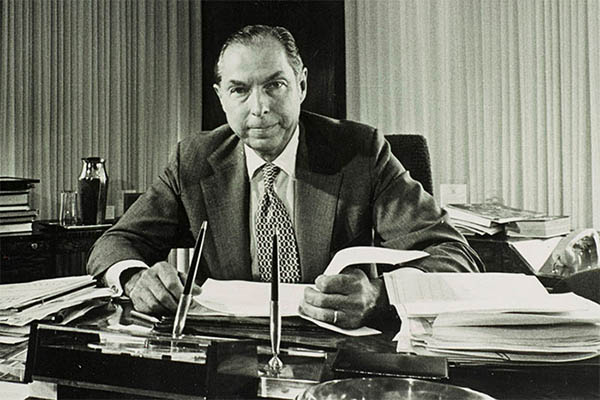
In this situation, Walter Wriston, then executive vice president of National City, saw an opportunity. The bank lent $10 million to a New York broker in government securities, which agreed to accept trades in CDs. With this move, the bank helped create a viable secondary market. A buyer of a certificate who needed cash could now immediately sell the certificate to another investor—just as they would with a Treasury bill.
Attracted by the safety and marketability of the product, investors bought many large CDs. By 1966, investors held $15 billion in outstanding negotiable CDs—ranked second only to Treasury bills ($64 billion). Negotiable CDs soared past $30 billion in 1970 and topped $90 billion in 1975.
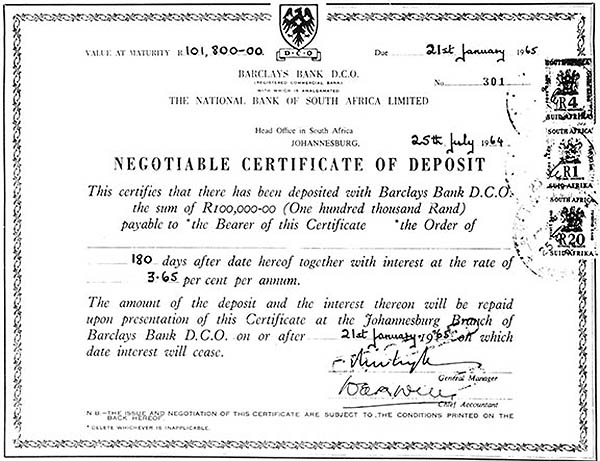
Barron’s said, “These certificates gained such widespread acceptance that their rates became the money market’s most keenly watched indicator, more so even than the traditional bellwether, Treasury bill yields.” A Wriston biographer wrote, “[The] negotiable CD would in no small measure help fuel [the 1960s economic] expansion by pumping funds into the banking system.”
OCC History: 1936–1966