




Anatomy of a Banknote
The designers of the national currency had several goals:
- attracting converts to, and building confidence in, the new banking system and money supply,
- promoting patriotism and civic awareness,
- preventing counterfeiting,
- stimulating the sale of U.S. government bonds,
- and striking a balance between local autonomy and federal authority.
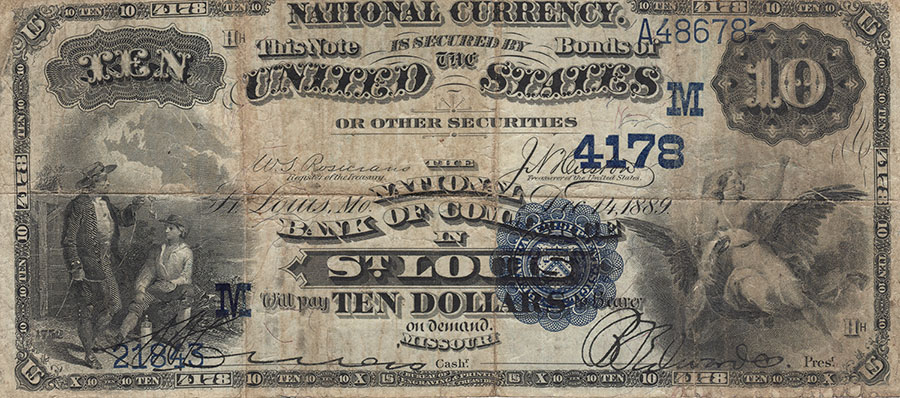
Explore the anatomy of the historic $10 and $1 banknotes below:
✕

National banks were required to purchase U.S. bonds or other investment-grade securities in an amount equal to 90 percent of the face value of a bank's notes.
These securities were placed on deposit with the OCC. If a national bank could not meet its redemption requirements, the OCC could sell the bonds and distribute the proceeds to noteholders.
 National banks were attracted by the prestige of having their name (and charter number) inscribed on the notes they issued.
 To make banknotes legally binding instruments, the National Bank Act required that each one issued by a national bank be signed by its officers.
 National banks were required to hold reserves of precious metal, to be paid "on demand" when notes were presented to them.
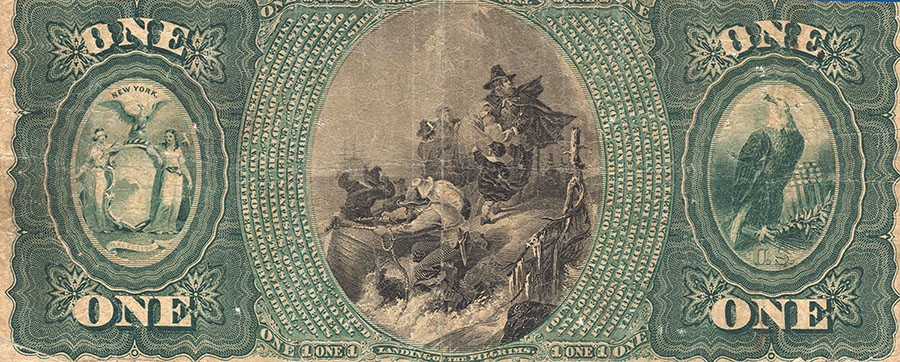

To promote historical awareness and patriotism, national currency depicted iconic scenes from the nation's past. Here, the Pilgrims land at Plymouth Rock.
 To foil counterfeiters, national banknotes were intentionally detailed and ornate. In addition, several denominations of national currency contained lengthy extracts from the law that assigned penalties for counterfeiting.
 The essence of the national banking system was that locally owned and managed institutions would operate under federal authority and supervision. This note from a New York national bank, showing the state seal on one side and the American bald eagle on the other, communicated that concept.
Part of:
Managing the Nation's Currency
Managing the Nation's Currency